
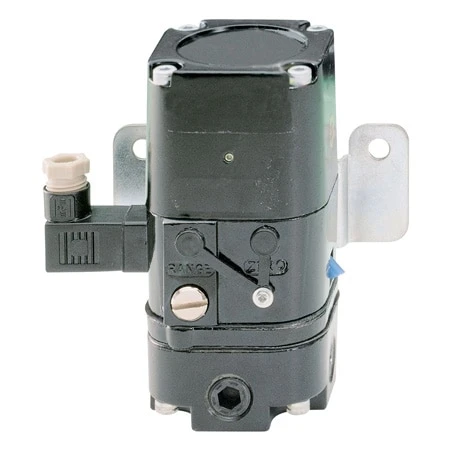
General Purpose Current To Pressure I/P Converter
Original price was: $398.00.$95.99Current price is: $95.99.
- Loop Power
- Ideal for Pneumatic Control Systems
- IP65 Sealed Case/NEMA 4 type enclosure
- Zero and Span Adjustments for Field Calibration
- 100% Quality Satisfaction
- Uncompromising quality, every time.
- Quality You Can Trust
- Your questions, our prompt answers.

A “current to pressure” (I/P) converter converts an analog signal (4 to 20 mA) to a proportional linear pneumatic output (3 to 15 psig). Its purpose is to translate the analog output from a control system into a precise, repeatable pressure value to control pneumatic actuators/operators, pneumatic valves, dampers, vanes, etc. Both IP210 and IP210A are loop-powered instrument, which eliminates the need for an external power supply (except for IP210-X120).
Principle of Operation
OMEGA’s IP210 and IP210A converts an analog signal (4 to 20 mA) to a proportional linear pneumatic output (3 to 15 psig). Its uncomplicated design and proven electromagnetic force balance deliver consistently high performance.
Both series provides a reliable, repeatable, accurate means of converting an electrical signal into pneumatic pressure. Its force balance principle is a coil suspended in a magnetic field on a flexible mount. At the lower end of the coil is a flapper valve that operates against a precision ground nozzle to create a backpressure on the servo diaphragm of a booster relay.
The input current flows in the coil and produces a force between the coil and the flapper valve, which controls the servo pressure and the output pressure.
Zero adjustment of the unit is made by turning a screw that regulates the distance between the flapper valve and the air nozzle. Span adjustment is made by varying a potentiometer, which shunts input current past the coil. An integral volume flow booster provides adequate flow capacity, resulting in fast response time and accurate control.
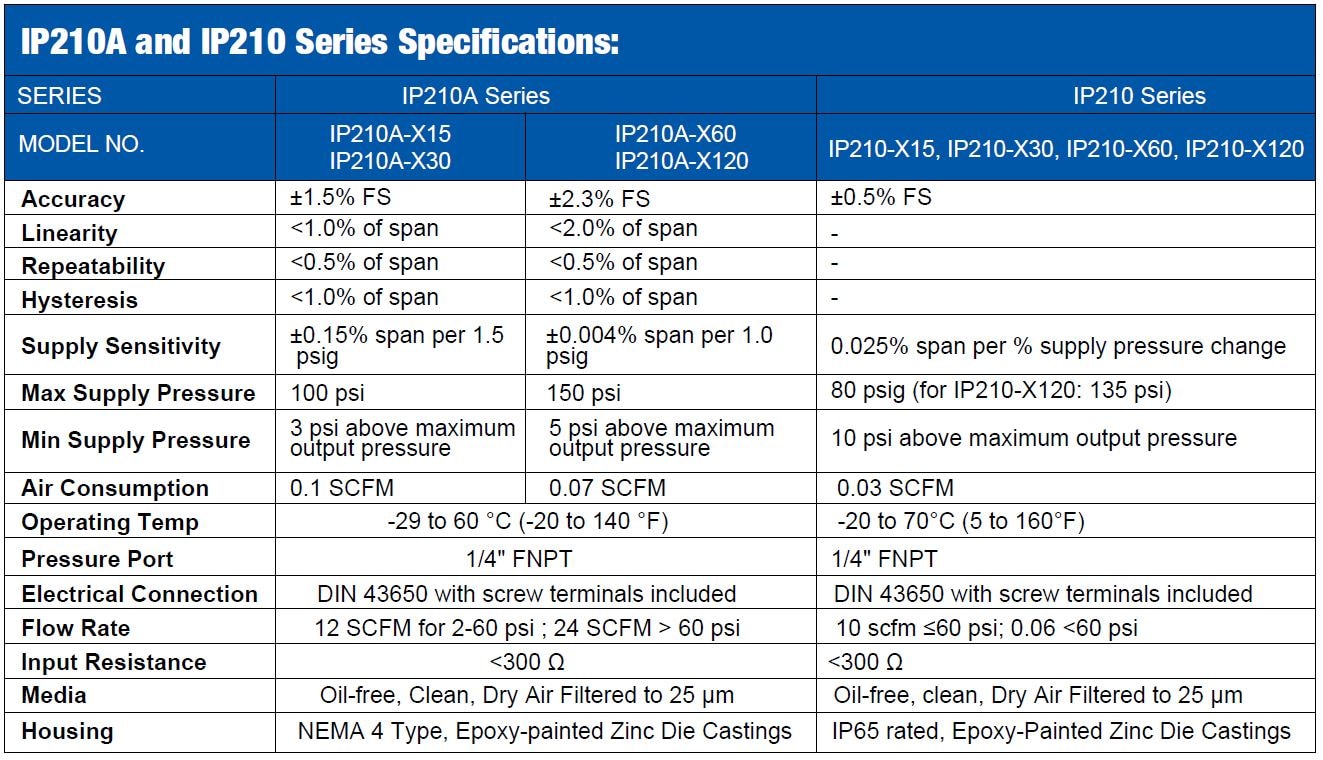
| Output Range | 3 to 120 psig, 3 to 15 psig, 6 to 30 psig, 2 to 60 psig |
|---|---|
| Accuracy | 2.50%, 1.50% |
| Input Signal | 4 to 20 mA |
| Connection | DIN 43650 A |
| Pressure Port Type | NPT Female |
| Pressure Port Size | 1/4" |
Be the first to review “General Purpose Current To Pressure I/P Converter”
Related products
Control & Monitoring
Air, Soil, Liquid, and Gas
Control & Monitoring
Control & Monitoring
Microstepping Motor Drives, Analog In/Step & Direction Control
Control & Monitoring
Control & Monitoring
Control & Monitoring
Control & Monitoring
Reviews
There are no reviews yet.